Wednesday, October 21, 2015

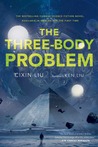
"The Three-Body Problem" by Liu Cixin

The Three-Body Problem (Three-Body, #1)The Three-Body Problem by Liu Cixin
My rating: 3 of 5 stars

The Three-Body Problem tells the story of an Alien Invasion; but it’s an unusual invasion, told in an unusual way. The book was a big hit in China where it was written, and it has gained lots of critical praise and achieved international success. I can see the appeal of the book right in the first few pages. It has an explosive start, right in the middle of the Cultural Revolution, giving an unprecedented look into modern Chinese history - at least unprecedented for Western readers, where a deep look into Chinese history and culture might feel like a look into an alien empire! It is a horrific setting, full of corruption and threats.

Its appeal might also stem from its first main character: a strong female lead, incorruptible and stoic, surrounded by corrupt men using the revolution for their own political gain, or at least to protect themselves from the witch-hunt that was the revolution.

The book seems to have been written by someone who likes physics, but is not a physicist; and from its tone, it seems aimed at people in the hard sciences. It uses a lot of jargon and scientific details. I am a physicist, and I don’t see how other people can appreciate all the details and nuances (could a lay person understand the importance of chaotic systems?). At the same time, the science has been dumbed down - for accessibility sake, I hope, rather than a failure of the author. Also, it has a grandiose prose that no physicist would use when describing his/her work; it sounds the kind of language a physicist would use when giving an interview to a non-scientific publication, and is trying to get an impressive soundbyte in; but instead of just a few grandiose lines, it’s the entire book. Perhaps this is indicative that the author has learned everything from popular publications, rather than actual study.

Then we get to the revelations of the second and of third part, when the author really seems to have no idea how physics works - both the science and how physicists work. First of all, the book describes a four-body problem, not a three-body problem - it’s hard to tell if the author is aware of that. He then talks about physicists hushing the results from accelerator experiments, as if the work wasn’t completely public (just look at the amount of press and information leaked about the LHC, and the big hoopla every time there is a hint of something weird). Towards the end, there is a lot of talk about extra dimensions, and it’s so out there that it feels more like wizard fantasy than science fiction.

The whole second part is very weird, and reads like one of those Japanese existentialist/fantastical mysteries, with a little bit of sci-fi thrown in. The characters behave in very “arbitrary” ways (that is, serving the purpose of the narrative, but not in a way that normal people would behave), and talk in a very flourished manner, so their behavior and speech is not natural at all (although that could be due to the translation from Chinese to English). Another thing I didn’t like is that the whole book also feels very elitist; it explicitly says several times that only the elites matter.

Despite its faults with the science and characters, the *story* is good. It has an incredible scope, starting in our history, bringing us to the present day and flinging us out into space. It keeps a good pace, and it’s constantly introducing us to new concepts and plot points. It builds slowly, but never slows down. There are several big reveals, but the plot never feels convoluted (only the science). It’s the kind of story in which there is a secret history / secret truth behind everything, and only a few are involved. On the other hand, it goes on the opposite direction of the “Chosen One” trope; the main characters are important to the world because of the work they do, because of the choices they made, and because of their sacrifices. The characters might speak and act in a weird way, but they aren’t flat at all; they have complex desires and driving forces. They get confused, they despair, they make mistakes, and they aren’t all good nor all bad. The conclusion is also just as ambiguous as the characters, and it feels satisfying. All in all, a good read.

View all my reviews

Sunday, September 20, 2015

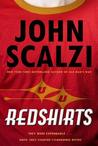
Redshirts, by John Scalzi

RedshirtsRedshirts by John Scalzi
My rating: 4 of 5 stars

A very entertaining book!

It has a very strange story - actually, strange is the wrong word, it’s a *wild* story. It’s wild, crazy, mad! And it’s a lot of fun!

On top of all that, it has a serious philosophical discussion on the nature of reality, perception, and the anthropic principle; in this aspect, it’s like the Matrix movie, in that it manages to add some real philosophical questions to your entertainment.

And just when you think it’s all resolved, when you think that the meta-story has been told, you realize there are still a lot of pages left, and then you go up another level into another meta-meta-story, and who know how deep this thing goes. And *then* things go even further the deep end!

View all my reviews

Sunday, August 16, 2015

"Smoke and Mirrors" by Neil Gaiman

Smoke and MirrorsSmoke and Mirrors by Neil Gaiman
My rating: 3 of 5 stars

I am a huge fan of Neil Gaiman, but I found this to be a strange collection of tales. A lot of the stories are dark and depressing. While his work is mostly dark (he seems to specialize on retelling of myths and legends, with a twist), they are not usually this depressing. Also, they were not as interesting as most of his work. The problem might be that I had already read most of the short stories in this collection elsewhere, and the stuff that was new for me (that is, that didn’t make it to other collections) is exactly the least interesting of his stories.

I liked that H.P. Lovecraft kept popping up in a number of the stories, Gaiman makes good use of the Cthulhu mythos. The best stories for me were “The Price”, “Only the End of the World Again”, and of course “Murder Mysteries”, one of Gaiman’s all time greats; but I had already read these stories elsewhere, so as a whole, the collection was disappointing.

If you haven’t read Murder Mysteries, then by all means pick this book up and give it a try, otherwise, you’re safe skipping it.

View all my reviews

Sunday, July 12, 2015

"The Best of H.P. Lovecraft", by H.P. Lovecraft

The Best of H.P. Lovecraft: Bloodcurdling Tales of Horror and the MacabreThe Best of H.P. Lovecraft: Bloodcurdling Tales of Horror and the Macabre by H.P. Lovecraft
My rating: 4 of 5 stars

Excellent collection of the master of horror! I had read this already back in high school, but I didn’t remember much of it. I decided that since there are so many references to Lovecraft’s work all over the place (books, movies, games, comics, etc…), I should give it a re-read. One of the things I do remember was that it was scary. It’s not easy for a book to be scary - movies can easily make you jump, but without the benefit of graphic scenes and loud noises, a book has to do a lot more work to get you scared - and Lovecraft manages just that.

I was surprised by the variety of stories in this collection. A lot of the stories (and none of the earlier ones) stories have nothing to do with the Cthulhu mythos, and are your typical horror stories - an anecdote with a horror twist at the end. But it’s when he gets to the Cthulhu mythos that he really shows his mastery. Some of the stories start as a mystery or adventure story, salted heavily with allusions to hidden things, great mysteries, and “unspeakable horrors”. Despite the exaggerated foreshadowing, Lovecraft does construct a good story, with interesting plot devices (at one point, doom is predicted not by a person having a vision, but by a *statistical analysis* of dreams and visions over a period!), and cliffhangers. His stories sometime link in subtle ways too - you will recognize things in one story that got mentioned in another that in principle had nothing to do with it (they are not sequels), so you slowly get the feeling of a larger world with a lot going on underneath. Another things that surprised me is that this is very much a sci-fi book - the monsters are usually characterized as aliens, be it from other planets or from other “dimensions”. There is a lot of space travel, travel through the folding of space, and the importance of physics and mathematics to the stories. There are even mentions of Einstein, relativity, quantum physics !

The major downside of the book is how melodramatic his prose is, specially his use of adjectives. Halfway through the book, it starts getting repetitive, as there are only so many ways to preface the word horror: "indescribable horror”, “Cyclopean horror”, "realms of unfathomable horror and inconceivable abnormality”, etc…

There are also an immeasurable number of incongruences to his plots and plot devices. For example, in a few of his stories, there are all-powerful antagonists, ancient beings who have mastered all sorts of dark arts and can destroy all of humanity at a whim, and yet are foiled by dogs (“The Dunwich Horror”, “The Whisperer in Darkness”). Another example is how his characters are always getting horrified by architecture, geometry and language - really, how bad can it be? It makes it difficult to relate sometimes. When someone says how they were paralyzed with fear because of the horrible architecture of the place, it’s not easy to feel sympathetic. A passage says: "My head was aching, and I had a singular feeling that someone else was trying to get possession of my thoughts” You know that feeling that someone is trying to get possession of your thoughts? Yeah, me neither.

In the end, if you do get past all the melodrama, you get treated to a vast mythos, with creatures and legends that pop up all over the place (“ah, so this is where that comes from!”), and that have laid important foundations to the genre of horror and sic-fi.

View all my reviews

Monday, July 06, 2015

"The Gates", by John Connolly

The Gates (Samuel Johnson, #1)The Gates by John Connolly
My rating: 3 of 5 stars

Good book, it felt a lot like a Neil Gaiman story, but with a lot more pseudo-science, and a lot less obscure mythology.


View all my reviews

Wednesday, July 01, 2015

"Burnt Tongues", edited by Chuck Palahniuk

Burnt TonguesBurnt Tongues by Chuck Palahniuk
My rating: 3 of 5 stars

This book is a collection of short stories, edited by Chuck Palahniuk, the author of "Fight Club", or more relevantly, of “Guts” and “Haunted”. He characterizes these stories as “transgressive literature”, stuff that pushes the edge and sometimes go right past it. Basically, it’s stuff that should be taboo, or disgusting, or from the mind of a disturbed individual, definitely something you do not talk about in polite conversation; and it’s eye-opening and wildly entertaining!

If you have read “Guts”, “Haunted”, or some of Palahniuk’s short stories, then you know what this is about (“Fight Club” is tame by comparison). But while I love Palahniuk’s work, this collection is only so-so. The quality of the stories vary a lot. There are a few stories there (like the first one, “Live This Down") that feel like something that Palahniuk would have written himself, from the subject to the style to the dialogue, and most of them have themes that must make Palahniuk proud (like a Special Ed class revolting against a bully, with terrible consequences). But while all stories are “transgressive”, not all are entertaining. They touch on a taboo subject, describe it, then peter out. Most of them end in an anti-climax. They are good, but not great.

Still, there are some gems in there - again, “Live This Down”, and also “Ingredients”, “Dietary", “Heavier Petting” and “Zombie Whorehouse”, among others. They are not for everyone - they are twisted, messed up stuff. If you like crazy and you like it with style, pick this up, it’s a good read.

View all my reviews

Saturday, June 20, 2015

The Martian, by Andy Weir

The MartianThe Martian by Andy Weir
My rating: 5 of 5 stars


The book tells the story of Mark Watney, an astronaut left for dead in Mars. In his words:

“It was a ridiculous sequence of events that led to me almost dying. Then an even more ridiculous sequence that led to me surviving.”

It’s the early years of Mars exploration, humans have just reached it, and are doing some exploratory missions, very similar to the lunar missions. The author skips right over the question of why we went to Mars, and starts with the premise that we went, and are still sending a few more missions. An accident happens during the current mission, and one of the astronauts is left behind, his crew thinking he died. Now he is in Mars, alone, with very little supplies and no communication with Earth, and nobody knows he is alive! Somehow he must find a way to survive. Since it takes place in the near future, the book doesn’t have any apparent futuristic technology - some new materials used for construction, but everything else is pretty much current technology. It makes all the challenges and solutions very believable and relatable. The author goes to great lengths to describe the technical aspects of the problems that the Watney faces, and of the solutions he finds, but in a really interesting way - rather than dull commentary, he uses the descriptions as a way to build tension, or to make the action seem more fast-paced than it is (sounds counter-intuitive, but he really manages to do it). Watney is a really funny guy, and makes not only a great character but a great narrator. The book is quite an exciting and enjoyable adventure. It’s one of my favorite books in years.

(view spoiler)

View all my reviews

Thursday, June 18, 2015

Dark Matter Beer!

Finally some proper recognition: Dark Matter beer, in honor of the LUX Experiment!


Sunday, May 31, 2015

Project 8 na mídia

O 1o eléctron do Project 8

  Publicamos nosso artigo na Physical Review Letters (PRL), e deu uma boa repercussão na mídia! A PRL escolheu nosso artigo como uma das "manchetes" e fez um artigo especial, e se prestarem atenção, vão ver que a figura de capa é minha ;) :

http://physics.aps.org/articles/v8/36

Este site tem a lista de revistas e jornais em que saiu notícias sobre a nossa experiência:

http://aps.altmetric.com/details/3924136/news


Contexto: Desde que vim para Santa Barbara (UCSB), tenho estar a trabalhar na experiência Project 8, que tem como objetivo medir a massa do neutrino. Para fazer isso, primeiro é preciso medir a energia de eléctrons com alta precisão, e para isso desenvolvemos uma nova técnica que permite medir a energia de eléctrons individuais sem pertubá-los, detectando a energia ciclotron emitida por um único eléctron. A foto acima mostra o nosso primeiro electron - é uma figura da frequência da radiação ciclotron vs tempo.  Publicamos o nosso artigo na Physical Review Letters, e teve uma boa repercussão na mídia científica, aparecendo em várias revistas e jornais. O único problema é que em vários dos sites eles só dão crédito ao MIT, que é só um dos colaboradores fazendo a experiência...

Friday, May 29, 2015

The Last Hero (Discworld 27), by Terry Pratchett

The Last Hero (Discworld, #27; Rincewind #7)The Last Hero by Terry Pratchett
My rating: 4 of 5 stars

Another masterpiece by Terry Pratchett! Ok, maybe not “masterpiece”, but a really, really fun book! The Last Hero is a great adventure taking place in the Discworld, with the titular “last hero” (Cohen the Barbarian) climbing Cori Celesti, the “Olympus” of the Discworld, to return that which the first hero stole - fire, and lots of it!

The book is a unique blend of fantasy, sic-fi, and satire. This time Terry Pratchett has some of our favorite heroes, the wizard Rincewind, Captain Carrot, and a surprise stowaway (among others) become astronauts! In order to save the world, they have to race to the top of the Cori Celesti, before Cohen and his Silver Horde reach it, and the fastest way there is going around the world, flying in a in a dragon-powered-spaceship after it has dropped off the edge of the ocean - remember, this is literally a *disc* world, it’s flat and the ocean just falls off the edges!

The book is structures so that the two narratives intertwined, and each has its own separate sets of characters and separate themes. While the narrative of Carrot and Rincewind focus on engineering and science (mixed with magic), and the adventurous spirit of explorers and astronauts, the narrative of Cohen focus on themes of old age, of what it means to be a hero, and pokes fun at staples fantasy novels. I think one of the readings of the story is that although we don’t have heroes like in the ancient mythologies (like Hercules or Beowulf), we have heroes like the watchmen (police) that put their lives on the line for the safety of citizens with no rewards, or explorers (astronauts) that fling themselves into the unknown.

When I picked it up, I was a little surprise with how short it was, but in the end it felt just right. Although the story is fas-paced, it does not feel rushed. It’s full of wit and fun, and with an excellent ending (which turns out to be yet another satire, this time of cliffhangers and ambiguous endings).

View all my reviews

Wednesday, May 13, 2015

"The War of the Worlds", by H.G. Wells

The War of the WorldsThe War of the Worlds by H.G. Wells
My rating: 3 of 5 stars

The War of the Worlds tells the story of the Martian invasion of Earth, written at the end of the 19th century. It is a classic of sci-fi and literature in general. But it is written before man had ever gone to space, had computers, radio communication, or airplanes, so it’s both amazing that the author H.G. Wells can write about alien invasions, but also very, very dated in both the science and ideologies. As I read it, my opinion kept going back and forth between finding it good or bad: sometimes he gets sic-fi, and shows good imagination; sometimes the book just shows how antiquated and limited the authors ideas were.

One example where the lack of imagination of the writer shows is the means of travel from Mars to Earth: a cannon bullet, which opens with a really tight screw-on lid. Maybe it's clever for the 19th century, but really implausible for today. The author would have been better served by coming up with some fantastical device that he couldn’t explain, but that would be more likely for an advanced civilization. However, we must keep in mind that the author is trying to present an alien invasion before we knew anything about space flight, or even normal flights. Even tanks weren’t commonly used in war at the time, and Wells’ martians use walking war “mecha” (the tripods), before anything remotely similar was used. So he can come up with some pretty good sci-fi.

The aliens themselves are another good step in the right direction: there is nothing human about them, they are no little green men, they are truly alien lifeforms. It’s incongruous to me when sic-fi stories come up with all sorts of aliens lifeforms and technologies, but the intelligent life is still humanoid. *That* is a sad lack of imagination, and Wells manages to avoid it here.

The book has a fantastic opening - it’s really well written, and it’s an exciting set-up for the story. The book is very descriptive; this is very unlike Wells other famous book, The Time Machine, in which lots of pages are filled with the narrator’s musings, opinions, and monologues. In this book, there is a lot more action (not in the sense of adventure or fighting, just in the sense of things happening), it’s just one thing after the other. Having heard about the famous radio broadcast by Orson Welles based of this book, this is something I had expected - I was expecting a good description of the invasion, with lots of facts, and with the reactions of the people. The authors delivers in this point, even if it doesn’t read like a news account of events.

I listened to the audiobook read by Roger Watson, and the reading is superb. His voice is very pleasant, he is easy to understand, and his narration adds the proper nuance and excitement when needed.

In summary, you should read it because it’s a classic, and shows the foundations of the genre, not because it’s great sci-fi. But take heart that it’s actually good and well-written, and explores great themes, like the place humanity might have in a larger universe.

View all my reviews

Monday, April 13, 2015

"Rabbit, Run" by John Updike

Rabbit, Run (Rabbit Angstrom, #1)Rabbit, Run by John Updike
My rating: 2 of 5 stars

Ok book. It tells the story of Harry "Rabbit" Angstrom, a middle-class American, married with one kid and another on the way. He is a former star basketball player in High School, who is no longer the star and doesn't know what to do with his life. He starts hating his life, so he leaves his wife, and takes up with a part-time prostitute for a little while. The book is mostly about his conversations with the people around him, and about him fumbling around without knowing what to do. The book is insightful and uncensored, taking a hard look into the concepts of family and marriage. The problem is, it's mostly boring. The first half of the book was extremely boring, and I was tempted to stop listening to it many times. Halfway through, things start becoming a little more interesting, mostly because that's when things get harder, and Updike starts looking at what is going on with the other characters a little. But it's just a little, he doesn't explorer them too deeply nor for too long a time. In the end, it was just ok.

View all my reviews

Monday, April 06, 2015

Station Eleven, by Emily St. John Mandel

Station ElevenStation Eleven by Emily St. John Mandel
My rating: 3 of 5 stars

Very good book. The characters were interesting, and the back-and-forth narration managed to add a lot of mystery and thrill to a fairly simple plot. However, I didn't like the use of the Prophet as the main antagonist. It was just irritating to have someone like him (a religious fundamentalist) given such an important role. We already have too many of those around in the US before the collapse of civilization, so it's annoying to have to deal with another one. The one small consolation is that a few comments by the main characters make it seem that these zealots are very common, and they are basically just a pest, not really that important, so that made Prophet-plot less annoying.

View all my reviews

Sunday, March 29, 2015

The Collected Stories of Arthur C. Clarke

The Collected Stories of Arthur C. ClarkeThe Collected Stories of Arthur C. Clarke by Arthur C. Clarke
My rating: 4 of 5 stars

An amazing collection of short stories. It's so vast that it's impossible to actually review it here, as it contains way too much to do it justice in just a few lines. I love that his histories are so positive about science. Most sci-fi is negative about science - we played at being gods, disaster ensues, etc... But his stories are generally about the great things we can achieve, about the wonders that we might discover, and about a brighter and better future. But towards the end, he also has some criticism of man's destructiveness, and a few disaster that might still happen if we don't improve.

One set of stories that I was particularly delighted with was the material from Tales from the White Hart, which were really funny. These stories were supposedly told by a Harry Purvis, who seemed to be an old scientist of some kind, who claimed to be privy to all sorts of peculiar and outrageous stories involving mad scientists and nutty professors. I particularly liked this character because it reminded me of another physicist named Harry who is always telling stories...

View all my reviews

Monday, March 23, 2015

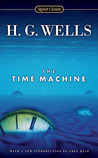
"The Time Machine" by H.G. Wells

The Time MachineThe Time Machine by H.G. Wells
My rating: 3 of 5 stars

It’s incredible how *not* dated it is. I was surprised to hear a discussion of time-space equivalency, how time is just another dimension in physics, 10 years before Einstein’s theory of relativity! (it was my belief that “spacetime” was popularized only after Einstein’s physics revolution, but now I know better). I was equally surprised by his use of evolution in all of its nuances as such a fundamental part of the plot.

Of course, he doesn’t get it right: evolution works way too fast on his story, and a few things aren’t quite right regarding how stars work, among other things. But the biggest problem are his ideas of how society and people work. A lot of the story revolves around the premise that the higher classes are better, in general, than the working poor - not just better in terms of how well they are doing, or how schooled, prepared, etc… Actually better, in some innate sense, such that the poor could never rise above their stations because they lack something. That the poor do the hard work because they are better suited for it, they even like it, they are happy to do the hard labor. Wells devotes a lot of pages to describing his ideas of society, and speculations on how it will evolve in the future. Maybe it’s part of an elitism inherent to 19th century England, but it was irksome. At the end, though, the dynamics between the Eloi and the Morlocks might be pointing that exploitation of the workers will lead to disaster, and some social justice is served.

Despite the long, sometimes repetitive and boring monologues, it was not a bad read.


View all my reviews

Monday, March 16, 2015

The Quantum Thief - Terrible physics, great sci-fi

The Quantum Thief (Jean le Flambeur, #1)The Quantum Thief by Hannu Rajaniemi
My rating: 4 of 5 stars

Terrible physics, great sci-fi.

Initially, my inclination was to hate the book. My main problem is the self-importance that seems to exude from the book and the protagonist: the protagonist is “the one”, the cleverest, most intelligent, most charming, most handsome, bravest, etc…, rogue in the universe. It’s annoying because it’s a mix of the usual tropes of the Gentleman Thief and the Lovable Rogue, a bit like Robin Hood. The best parallel is almost every thief in RPG games and books, but this time in a pseudo-sci-fi setting. I call it pseudo sic-fi because it feels more like a fantasy setting, with warriors and wizards, using some physics-sounding names so that it’s not obvious that all this stuff is pure magic. This gets pretty annoying, because a lot of the stuff sounds like it should made sense, but it really doesn’t. For example, the author throws around the word “quantum” without any care for what it means, like when he mentions that there is a "quantum link” between two characters; it seems that you can safely replace “psychic” for “quantum” anywhere in book! And the use of the latest jargon does very little to mask what are obvious crappy sci-fi staples, like “nano-missiles” (“photon-thorpedoes”?), WIMP beacons, neutrino scanners, etc...

If you stop thinking of this less as sic-fi and more as fantasy, it gets less annoying; magic is magic, it doesn’t have to make sense. Once you get through that, you can see how great the book is. The story itself is not necessarily great - I am not sure I cared much for the plot, and certainly didn’t care for the main protagonist, the Thief (although I liked a lot the secondary protagonist, the Detective). However, the book presents an incredibly rich world, with new concepts that deconstruct and break all traditional sense of society and self.

Although terrible on physics, the book excels when it comes to things taking place in the realm of the mind: communication, augmentation, consciousness, resurrection, and tons of other features that go completely unexplained. There is a meshing of the physical and virtual world, like the Magic Leap augmented reality concept, but it seems to include not only vision and the other physical senses, but also memory and consciousness. It seems that it’s on all the time, and people can use virtual screens to hide or to keep private - and other people are obliged to comply with these virtual screens. People brains have been digitized, and their bodies (and brains) seem to be artificial. It all makes very little sense, but that’s ok; here the author is pushing the envelope, developing new ideas, and I think we can forgive him if he doesn’t know how something would work; the point is not the how, but what happens next, how things could be. Here he is creating something new and just beyond our understanding, offering us glimpses not only of the future, but of a fantastic new reality where things work very different from ours (like cavemen would see the our world). It is a truly revolutionary and evolutionary look into humanity’s possible future, and the highest caliber sci-fi.

View all my reviews

Thief of Time

Thief of Time (Discworld, #26; Death, #5)Thief of Time by Terry Pratchett
My rating: 4 of 5 stars

Thief of Time tells the story of the construction of the world's most accurate clock, and how that will bring about the end of the world! Like the previous Discworld books, this is a fantasy novel in a medieval-like and magical setting, but this time it mixes in some science fiction to the story. It liberally uses concepts from relativity and quantum physics, and although it's only very superficial (and "stretched" to fit the Discworld style), it still makes good sci-fi. In fact, and very surprisingly, it's one of the best "sci-fi" books I have read recently!

Also, it's a very entertaining book. On my last review of a Discworld novel (I am going through the whole series), I complained about Terry Pratchett losing his initial spark, getting a little repetitive, and how that was understandable, after more than 20 books... Well, turns out he still has that spark, and can still write brilliant stories in the Discworld!


View all my reviews

Good reads

I haven't posted here forever, so now I am resurrect this blog with a new purpose.  Previously, I used it to document my travels, but that ended up being too much work.  To keep it alive until I start having new comment, I will post my book reviews from Goodreads.  Not great stuff, but it's the only non-physics stuff I have been writing lately, so here it goes.

Saturday, November 02, 2013

Fiat LUX

Publicamos nossos primeiros resultados! A minha experiência, LUX Dark Matter Search, anunciou esta semana os resultados do "run" inicial de ~90 dias. Este é um "run" curto, com o objectivo de demonstrar que o detector funciona bem, e não viu nenhum sinal de matéria escura. No entanto, acabou batendo a sensitividade de todos os outros experimentos, demonstrando que os possíveis sinais positivos nos outros experimentos são falsos, e é agora o melhor detector de matéria escura do mundo! Agora podemos começar a experiência pra valer, que vai durar mais 300 dias de aquisição de dados, talvez com uma descoberta no fim ;)
Aqui estão alguns artigos, explicando tudo em português:

Wednesday, September 04, 2013

SUSY2013, Trieste e Veneza

Semana passada fui dar uma palestra na conferência sobre Supersimetria SUSY 2013, em Trieste, na Itália.  Foi uma palestra simple, um "status update" sobre a experiência LUX, nenhum resultado novo pra mostrar.  E também parecia que o pessoal fazendo SUSY (quer dizer, os teóricos) estão um pouco perdidos, sem nenhuma idéia nova, a espera do futuro "run" do LHC para terem novos resultados.  Acho que a figura do Dimopoulos explica bem a posição dos teóricos:


Ainda sim foi legal, deu pra discutir bastante sobre as consequências dos últimos resultados do LHC para matéria escura, e a conferência estava cheia de brasileiros, o que fez tudo mais divertido :)

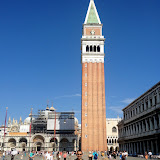
Depois ainda deu pra passa 24 horas em Veneza na volta.  A cidade é espetacular, lindíssima.  Só é pena que estava sozinho.  Definitivamente, vou ter que voltar ;)

Fotos de Trieste Fotos de Veneza

Sunday, June 02, 2013

Chegada em Portugal

 Esta semana cheguei em Portugal depois de quase 4 meses nos Estados Unidos, e milagrosamente não perderam nenhuma das minhas malas!  Mas isso era só uma breve calma antes da tempestade - eu mal sabia o que me esperava em casa...

Quando chego em casa na terça, descubro que cortaram a eletricidade.  Não parece tão mal, exceto... A geladeira!  Eu tinha deixado umas carnes e legumes congelados, mas agora era só uma massa cinzenta uniforme, gotejante, e um cheiro de putrefação horrível.  Descubro também que cortaram meu celular, e portanto não tenho internet nem outro meio de comunicação, então vou andando pra EDP.  O problema afinal é que apesar de eu ter debito direto da conta, logo no primeiro mês a conta ficou acima do limite e o dinheiro não foi debitado, e apesar de eu receber todas as minhas contas por email, os avisos de atraso só vem por carta.  Eles vão reativar a conta, mas só podem ir ligar a luz na quinta-feira!  Até lá, velas, geladeira trancada pro cheiro não escapar, sem internet, e banho gelado - e ainda por cima a fazer frio!

Logo depois fui a vodafone pra reativar o celular, mas ele só volta a receber sinal na manhã seguinte.  Resultado: ele fica sem bateria, porque passou a noite toda tentando reconectar.  Eu decido ir a universidade carregar o celular e laptop, mas começa a maior chuva.  Não tem problema, basta ir de carro... exceto que a bateria estava descarregada e o carro não pega!  Eu passo o dia em casa, desfazendo as malas e arrumando a casa.

Na quinta de manha, finalmente ligam a eletricidade, e eu faço uma limpeza geral na geladeira.  O seguro cobre mandar um mecânico pra dar a partida no carro.  Parece que está tudo se resolvendo, mas aí eu descubro que o roteador morreu, e eu fico sem internet em casa.  Também descubro cortaram minha conta do Via Verde (o pedágio automático de Portugal), porque eu mudei de cartão de crédito e não os avisei.  E agora que já tenho eletricidade pro aquecedor a água quente, a chuva para e o clima esquenta.  E quando entro em casa no fim do dia vejo que o cheiro ainda está lá - deixo a geladeira "de molho" em vinagre, pra ver se passa.

Sexta-feira de manhã a casa toda cheira a vinagre, e lá vou eu passar mais 2 horas limpando a geladeira (e todos os buracos, frestas, borrachas, etc...).  Parece que o cheiro finalmente está passando. Arranjo outro roteador, troco os cartões na Via Verde.  Agora sim, tudo está se resolvendo.  E assim que eu começo a relaxar, caminhando da universidade pra casa no fim-do-dia, ploft!  Um pássaro faz cocô na minha cabeça.

Assim é perseguição!


Tuesday, February 12, 2013

Underground toilets

Working 1.5km (~1 mile) underground presents a unique set of challenges.  Among them: how do go to the bathroom?  There is very limited water plumbing, so the use of standard toilets is not possible.  The solution: incinerating toilets!  Just make sure you aren't seating on it when it's active.


Friday, February 08, 2013

Train Joy Ride

Training to be a guide in the Sanford underground laboratory.
Cons: you are more likely to work nights and weekends;
Pros: you get to drive the train!


Wednesday, November 21, 2012

Continuing with the posts of old pictures:  I scanned some pictures I have with me here of a trip I did to the Brazilian island of Fernando de Noronha, a natural paradise far into the Atlantic.  I went by myself when I was 15, some time in 1994 I think.  It was a very cool trip, where I got to be chased by sharks and almost killed by lobsters (you will have to ask me if you want the story ;) ).

Fim de semana em Braga


Eu fui passar o fim de semana com a minha prima Letícia em Braga. A gente foi pra inauguração da discoteca Rocco, com o Cosmo Klein (ele canta Beautiful Lie - foi massa!). Depois fomos andar pela cidade, mas aí descobri que a Leticia não gosta muito de ver pontos turísticos históricos - ela passou quase correndo por tudo :D

Descobri também que Braga é a "Capital da Frescura" - estava escrito por toda cidade!

Sunday, November 18, 2012

Cleveland, OH

I was showing my Worldphotos webapp (which shows Picasa web albums on a world map) to someone, and noticed that it was conspicuously missing a lot of trips that I have done.  I will try to update it over the next few weeks to add more trips.  I started with an easy one (because there wasn't much to it): Cleveland, Ohio.  I went there quite a lot during 2008, to work on LUX0.1, a prototype for our Dark Matter detector:

https://picasaweb.google.com/110817871594515146564/20080317_Cleveland_Case

Saturday, November 10, 2012

My Books

I have finally catalogued all my real book in GoodReads (that is, not audiobooks and ebooks). The plan is to get an ebook version of all (or of most) the books I have, so that I don't have to carry a ton of books with me the next time I move.  The first step in this plan is to catalogue everything I have.  This was inspired by a story in the book Prague, in which a couple of intellectuals in Budapest gets warned that they will be invaded by Russian troops the next day, so they have one night to pack and escape.  But they don't time nor the means to transport everything, their huge book and records collection.  So they decide that will write down everything they have, every book, article, recording, and then they can spend the rest of their lives rebuilding their collection.  I now have my list done, and I am ready to start rebuilding my library.

http://www.goodreads.com/review/list/12862594-luiz?shelf=paper

Wednesday, November 07, 2012

Memórias no Facebook


Criaram no Facebook um grupo da nossa turma do colégio Santa Teresa, de 1996.  Foi ótimo reconectar com algumas pessoas daquela época.  Também achei legal que tenham feito scans de fotos antigas e colocado elas no facebook.  Isso me inspirou a procurar fotos daquele tempo também, e descobri estas aqui comigo em Portugal  :)

1996_Colegio_Santa_Teresa

Thursday, December 01, 2011

Defenestração

Para comemorar a Restauração da Independência de Portugal, que culminou com uma defenestração, vai aqui uma crônica do Luís Fernando Veríssimo sobre o assunto:


"Certas palavras tem o significado errado. Falácia, por exemplo, devia ser o nome de alguma coisa vagamente vegetal. As pessoas deveriam criar falácias com todas as suas variedades. A Falácia Amazônica. A misteriosa Falácia Negra.
Hermeneuta deveria ser o membro de uma seita de andarilhos herméticos. Onde eles chegassem, tudo se complicaria.
- Os hermeneutas estão chegando!
- Ih, agora que ninguém vai entender mais nada…
Os hermeneutas ocupariam a cidade e paralisariam todas as atividades produtivas com seus enigmas e frases ambíguas. Ao se retirarem deixariam a população prostrada pela confusão. Levaria semanas até que as coisas recuperassem o seu sentido óbvio. Antes disso, tudo pareceria ter um sentido oculto.
- Alo…
- O que é que você quer dizer com isso?
Traquinagem deveria ser uma peça mecânica.
- Vamos ter que trocar a traquinagem. E o vetor está gasto.
Plúmbeo deveria ser barulho que um corpo faz ao cair na água.
Mas, nenhuma palavra me fascinava tanto quanto defenestração.
A princípio foi o fascínio da ignorância. Eu não sabia o seu significado, nunca me lembrava de procurar no dicionário e imaginava coisas. Defenestrar deveria ser um ato exótico praticado por poucas pessoas. Tinha até um certo tom lúbrico. Galanteadores de calçada deveriam sussurrar ao ouvido de mulheres:
- Defenestras?
A resposta seria um tapa na cara. Mas, algumas… Ah, algumas defenestravam.
Também podia ser algo contra pragas e insetos. As pessoas talvez mandassem defenestrar a casa. Haveria, assim, defenestradores profissionais.
Ou quem sabe seria uma daquelas misteriosas palavras que encerram os documentos formais? “Nesses termos , pede defenestração..” Era uma palavra cheia de implicações. Devo até tê-la usado uma ou outra vez, como em?
-Aquele é um defenestrado.
Dando a entender que era uma pessoa, assim, como dizer? Defenestrada. Mesmo errada era a palavra exata.
Um dia, finalmente, procurei no dicionário. E aí está o Aurelião que não me deixa mentir. “Defenestração” vem do francês “Defenestration”. Substantivo feminino. Ato de atirar alguém ou algo pela janela.
Ato de atirar alguém ou algo pela janela!
Acabou a minha ignorância, mas não minha fascinação. Um ato como esse só tem nome próprio e lugar nos dicionários por alguma razão muito forte. Afinal, não existe, que eu saiba, nenhuma palavra para o ato de atirar alguém ou algo pela porta, ou escada a baixo. Por que então, defenestração?
Talvez fosse um hábito francês que caiu em desuso. Como o rapé. Um vício como o tabagismo ou as drogas, suprimido a tempo.
- Lês defenestrations. Devem ser proibidas.
- Sim, monsieur le Ministre.
- São um escândalo nacional. Ainda mais agora, com os novos prédios.
- Sim, monsieur lê Mnistre.
-Com prédios de três, quatro andares, ainda era possível. Até divertido. Mas, daí para cima vira crime. Todas as janelas do quarto andar para cima devem ter um cartaz: “Interdit de defenestrer”. Os transgressores serão multados. Os reincidentes serão presos.
Na Bastilha, o Marquês de Sade deve ter convivido com notórios defenestreurs. E a compulsão, mesmo suprimida, talvez ainda persista no homem, como persiste na sua linguagem. O mundo pode estar cheio de defenestradores latentes.
- É essa estranha vontade de jogar alguém ou algo pela janela, doutor…
- Humm, O Impulsus defenestrex de que nos fala Freud. Algo a ver com a mãe. Nada com o que se preocupar – diz o analista, afastando se da janela.
Quem entre nós nunca sentiu a compulsão de atirar alguém ou algo pela janela? A basculante foi inventada para desencorajar a defenestração. Toda a arquitetura moderna, com suas paredes externas de vidro reforçado e sem aberturas, pode ser uma reação inconsciente a esta volúpia humana, nunca totalmente dominada.
Na lua-de-mel, numa suíte matrimonial no 17º andar.
-Querida…
- Mmmm?
-Há uma coisa que preciso lhe dizer…
-Fala amor.
-Sou um defenestrador.
E a noiva, na inocência, caminha para a cama:
- Estou pronta pra experimentar tudo com você. Tudo!
Uma multidão cerca o homem que acaba de cair na calçada. Entre gemidos, ele aponta para cima e balbucia:
- Fui defenestrado…
Alguém comenta:
- Coitado. E depois ainda atiraram ele pela janela.
Agora mesmo me deu uma estranha compulsão de arrancar o papel da máquina, amassa-lo e defenestrar essa crônica. Se ela sair é porque resisti."


Luís Fernando Veríssimo - Defenestração

Wednesday, September 28, 2011

Faster-Than-Light Fun

It's has been a lot of fun to follow the excitement about faster-than-light neutrinos on the science blogs, and I specially like the follow-up discussions in the comments sections.  It's entertaining to see the theorists come up with all sort of harebrained schemes to explain the result, in case it turns out to be right.  The two things that stood out the most for me:
  • MINOS has already seen faster-than-light neutrinos back in 2007
  • A theory that says that what we are seeing isn't the result of neutrinos traveling faster than light, but light traveling slower than light!  That is, this whole time we have been measuring the speed of light, we have been wrong, it wasn't the speed of light in relativity, but just an approximation.  The idea is that the photons interact with virtual particles in the vacuum, slowing them down - this is called the Scharnhorst effect.  So there is a c that we measure, and a c_0 which is the true speed of light, the one used in relativity.  The neutrinos interact less than photons, so they can get closer to c_0 than light itself.  Someone even calculated that the effect should be close to what is observed at OPERA, but it seemed to use a lot of handwaving to get the right result.
Like I said, fun stuff!  To read more (I chose these 2 specifically for their names):

Tuesday, February 01, 2011

Fotos do iPhone (e iPod)

Mais uma vez, perdi as fotos que tinha no iPhone quando fiz um upgrade :( . Felizmente já tinha copiado as fotos da minha última viagem, e perdi pouco.

Decidi resolver esta situação de uma vez por todas, e descobri dois Apps pra isso. Um é o PicBox (grátis) - quando a gente executa o app, ele automaticamente transfere todas as fotos ainda não transferidas para o Dropbox. Outro é o QuickShot with Dropbox ($1). Este app substitui o app de camera do iPhone, só que ao invés de gravar as fotos no iPhone, as fotos são enviadas imediatamente para o Dropbox. Como não é de graça, ainda não testei, mas se começar a tirar mais fotos no iPhone talvez eu comece a usá-lo.

Para quem não conhece o Dropbox: é um serviço de transferência de arquivos, que sincroniza uma pasta na internet com o computador, permite compartilhar arquivos com muita facilidade, e dá 2GB de graça. Neste caso, quando o iPhone transfere as fotos para o Dropbox, elas são copiadas automaticamente para o computador. Se não o conhece, recomendo. Aliás, se forem testar o Dropbox, agradeço se usarem meu convite: eu ganho espaço extra sempre que alguém o usa - e melhor ainda, quem usa o convite também ganha 250MB extra :) .

Convite para o Dropbox.

Friday, December 17, 2010

Parrrri

Paris - Luiz, em frente a Torre Eiffel

No começo de Novembro houve um fim-de-semana prolongado, e eu e a Ines resolvemos aproveitá-lo para fazer uma pequena viagem a Paris! Apesar de curta, a viagem não foi corrida e pudemos passear relaxadamente. Andamos pra todo lado, fizemos e vimos um pouco de tudo. Fomos ao Arco do Triunfo e descemos passeando pela Champs-Élysées, a avenida mais chique de Paris e portanto do mundo; fizemos um passeio de barco pelo rio Seine, parando na Catedral de Notre Dame para admirar os gárgulas; subimos a Torre Eiffel, com vistas espetaculares pra toda a cidade; assistimos a um pôr-do-Sol da cúpula da Basílica de Sacre Coeur, com vista para a Torre; fomos ao Museu de L’Orangerie, ver os Lírios d’água do Monet (tem quadros dos lírios pelo mundo todo, mas são só ensaios – o produto final estava aqui); e fomos ao Louvre, onde realmente tivemos que correr o dia todo para conseguir ver uma pequena fração das suas obras de arte.Paris - Luiz e Ines num passeio de barco no Seine, em frente da Catedral de Notre Dame, a famosa catedral gótica de 1163

Pra minha surpresa, outra grande atração foi a comida, desde a famosa “haute cuisine”, com pratos mais pra ver do que comer, até os lanches, como o cachorro-quente francês (um monte de queijo delicioso por cima) até os nossos preferidos: crepes. Comemos crepes todo dia, de todo tipo, com nutella, com manteiga e canela, e até com queijo feta e berinjela; teve um dia que comemos crepes três vezes. Também demos muita sorte com um restaurante indiano, que era perto do hotel, e um outro marroquino (só de escrever está me dando fome). A irmã da Ines também foi com o namorado, mas a viagem deles deu problema no início, e depois só nos encontramos duas das noites. Mas numa dela saímos com umas amigas que estavam estudando lá para comer fondue (de carne e de queijo, e sem limites), e depois fomos a uma boate, a Favela Chic – brasileira!

A Ines se divertiu bastante com o meu francês – aliás, o minha completa e profunda ignorância de qualquer coisa em francês, e a incapacidade de pronunciar qualquer coisa.  Parece que o fundamental de se falar francês é não pronunciar a segunda metade da maioria das palavras, e enrolar muito os R’s, que nem no título do post…  Felizmente os franceses foram muito mais simpáticos do que lhes dão crédito, e aceitaram falar em inglês sempre que necessário.

A viagem foi ótima, e nem saiu muito cara – evitamos comer em lugares muito caros (mas sem deixar passar oportunidades), e até conseguimos ficar num hotel por menos de 50 euros por noite (com um lugar com croissants deliciosos e baratos bem pertinho – estou ficando com fome de novo!).

Para verem as fotos, cliquem aqui ou nas fotos acima.  (Há tambem um album maior, com mais de 60 fotos)

Thursday, December 09, 2010

Wired LUX

Maybe Dark Matter is hot after all (again, laugh if you’re a nerd).  Now there is an article on Wired about LUX, the other Dark Matter experiment I’m on:

http://www.wired.com/wiredscience/2010/12/sanford-lab-gallery/

Monday, December 06, 2010

Cool Dark Matter

Dark matter might not be hot, but it’s certainly cool (laugh if you’re a geek):  I am starting to hear about it more and more, even on TV!  When I joined the field, there was little mention of it outside of papers in the field.   Now the field exploded, there are tons of tangential papers, and it gets regularly mentioned in the more popular journals (e.g. Nature) and magazines (e.g. Discover).  But the best is certainly the most surprising – we now get regularly mentioned on TV.  That is thanks to “The Big Bang Theory”, in which the main characters (Leonard and Sheldon) occasionally dabble in Dark Matter experiments and theory.  Some highlights (including links):

  • Leonard is “examining the radiation levels” of PMTs for a DM experiment [S02E15] – I have done that too!
  • A whole episode about Dark Matter, with a list of direct detection experiments behind Sheldon, including XENON10! [S03E04]
  • DAMA gets mentioned – although only a few people would get that [S02E15]
  • Determining Leff at low energies for Xe detectors – ok, even less people would get that.  It’s only a scribble on the whiteoard on the background, but someone caught that and put it on their presentation on the subject.  [S04E04]

I am still surprised that the show is such a hit – who would think a show that constantly makes jokes that only a handful of people in the world understands would be so successful?

Update 1 – The episode for the Leff is S04E04 – thanks Carlos!

Update 2 – It turns out it’s Dark Matter Awareness Week!  Were you aware?

Friday, September 24, 2010

(Un)Seen University

20100921_Oxford_0049No fim-de-semana passado, a colaboração do experimento ZEPLIN-III teve uma reunião em Abington, na Inglaterra.  Logo depois era o meu shift (plantão), em que tinha de ir a mina de Boulby para tomar conta do experimento por uns dias.  Era minha primeira vez como o supervisor, o que significa que eu estava encarregado do experimento, e também dos detalhes logísticos, como chegar lá.  Isso também significa que esta foi a primeira vez que eu dirigi do lado errado da rua (os Ingleses conduzem na faixa esquerda).  Felizmente correu tudo bem, apesar dos gritos de pânico do Alastair, um colega que tinha o shift comigo (“’Esquerda! Esquerda!”, etc…).

Mas entre a reunião em Abington e o shift na mina, tinha um dia para a viagem, e aproveitei para andar umas horas por Oxford, que fica ao lado de Abington.  Quando cheguei, a cidade ainda estava coberta por uma névoa, e francamente seria uma decepção se não estivesse.  Então tive a oportunidade de ver as universidades medievais semi-escondida na névoa, com torres góticas rompendo as brumas.  Mas depois o dia clareou, a névoa se foi, e deu pra aproveitar um dia bonito e tirar umas boas fotos.  Para mim, o mais legal de ver Oxford foi o quanto ela me lembrava (quer dizer, evocava) a “Unseen University” do Terry Pratchett, a universidade dos magos do Discworld.  E não sou só eu que pensa assim, já que a Oxford também foi usada como cenário para a escola de magos do Harry Potter.

Para verem as fotos. cliquem aqui ou na foto acima.

PS.:  Uma surpresa agradável: descubri que a rede wifi que temos em Portugal, a eduroam, se estende por toda a Europa mesmo, até na Inglaterra – abri meu computador e tinha rede, sem ter que configurar nada!  Foi muito útil.

Saturday, August 07, 2010

Patara, Kas e Saklikent

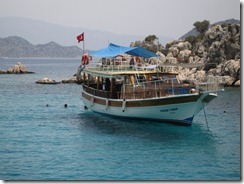
Kas, Turquia - Passeio de barco pelo Mediterrâneo - O barco parou várias vezes em enseadas para podermos banhar e mergulhar no mar Eu e a Ines fomos passar ~1 semana de férias na Turquia neste verão.  Nós passamos 5 dias em Istanbul, a maior cidade do país, e 3 dias na costa sul do país, na região de Fethiye.  Para ler sobre a primeira parte da nossa viagem a Turquia, veja o post anterior: Istanbul (Not Constantinople).

Depois de 4 dias em Istanbul, eu e Ines pegamos um vôo para o sul.  A gente tinha decidido que queria pegar uns dias de praia, e pesquisamos no Google qual era a melhor praia da Turquia.  Vários "sites" indicaram Patara, uma praia de 18km de extensão no Mediterrâneo, perto da cidade de Fethiye.  Escolhemos ao acaso uma pensão na vilazinha, a Akay Pension, e só quando chegamos lá é que descobrimos que a pensão era muito bem recomendada na internet, especialmente por causa da ótima comida.  Descobrimos isso logo que chegamos: nosso primeiro jantar lá (uma "caçarola" de galinha) foi a melhor refeição da viagem.  Os donos eram um casal muito simpático e atencioso, e Kazim (o dono) nos ofereceu muitas dicas e ajuda com o planejamento dos nossos dias lá.  Se nós soubéssemos antes como era bom em Patara, tínhamos ficado muito mais tempo - ficamos muito arrependidos de ter ficado tão pouco. 

Patara era uma cidade do Império Romana, onde nasceu o famoso bispo Santo Nicolau no século IV, em quem é baseado o personagem do Papai Noel.  Antes do Império Romano, a região era habitada pelos Lícios, um povo ligado aos gregos, por volta dos séculos 7 a 4 antes de Cristo.  Aliás, aprendemos que muitas das histórias e mitos gregos se passaram na costa oeste Turquia, e mais especificamente na região da Lícia, onde estávamos.  Por exemplo, Tróia, da famosa guerra de Tróia narrada na Ilíada, ficava na Turquia.  O Rei Midas, aquele do toque de ouro, era um rei da Lícia, na região onde ficamos.  Também é da Lícia o Rei Gordio, que crio o nó górdio, um nó impossível de ser desamarrado, de tal maneira que um oráculo previu que quem desatasse o nó conquistaria a Ásia.  Diz a lenda que Alexandre o Grande, quando passava por lá, foi examinar o nó e depois de muito pensar, puxou a espada e cortou o nó; logo depois ele conquistaria todo o mundo conhecido.  E há finalmente a história do velhinho generoso que dava presentes as crianças órfãs e pobres... 

Kas, Turquia -  Praia de Kaputas, entre Patara e Kalkan (uma cidadezinha turística), com águas de um azul muito bonito, quase turquesaNo primeiro dia em Patara fomos a praia.  É uma boa caminhada para chegar a praia, porque a estrada passa por uma área protegida por causa das ruínas de Patara.  A praia é muito longa e calma, e passamos o dia pegando sol e relaxando.  Na volta, passeamos pelas ruínas, que estão sendo restauradas.  O que mais chama a atenção é o anfiteatro romano, enorme e muito bem conservado.  Também haviam restos de palácios, casas e de uma basílica (eu acho - as coisas não estavam descritas em lugar nenhum).  Dava para ver que o trabalho de restauração sendo feito: haviam fileiras de pedras organizadas por tamanho e formato, ou por detalhes, tomando um campo inteiro.  Algumas tinha pedaço de um arco, outras tinham um linha que parecia ser a fachada de um telhado, etc...  Era como um quebra-cabeça gigante, remontando todas aquelas pedras em palácios, casas, ruas, colunas... Patara, Turquia - Patara foi uma cidade durante o Império Romano, e seu residente mais famoso foi o bispo Santo Nicolau do século IV, ou Saint Nicholas, que eventualmente ficou conhecido como Papai Noel (sim, é ele mesmo!).  Sobraram muitas ruínas desta época, como os arcos de entrada da cidade. E gigante mesmo, pois vimos que as pedras eram numeradas, e encontramos algumas com os números bem além dos 880,000!  Também havia um cemitério Lício sendo desenterrado, com os túmulos (sarcófagos em formato de templos) construídos acima da terra.  Estes eram ainda mais antigos do que as ruínas romanas, com uns 2,500 anos de idade.

Kas, Turquia - Passeio de barco pelo Mediterrâneo - O barco ia até as ruinas submersas de Kelkova, uma cidade pré-romana que afundou em um terremoto.  Só é pena que não podemos mergulhar lá - é uma área protegida.No dia seguinte fomos a Kas para pegar um passeio de barco.  Este tipo de passeio nesta região era muito recomendado pelo guia turístico, pelo pessoal da pousada e até pela revista de bordo do avião.  As estradas para Kas era cheia de curvas e contracurvas, beirando um desfiladeiro que dava pro mar.  Apesar de muito bonito, chegamos em Kas em cima da hora, e não pudemos pesquisar muito antes de escolher um barco, pois todos partiam em menos de 10 minutos.  Pegamos um que parecia bonitinho (não queríamos uma monstruosidade de fibra, mas algo de madeira, mais tradicional), e demos sorte na nossa escolha, pois foi o barco que voltou mais tarde, as 7 da noite.  O barco parou 5 vezes para banharmos no mar, geralmente em enseadas com nada a volta.  A água era de um azul perfeito, e limpíssima.  O destino final da viagem era Kelkova, as ruínas de uma cidade antiga submersa depois de um terremoto.  A água era tão limpa que dava para ver.  Só era pena não que podíamos mergulhar lá (era uma zona protegida)!   Felizmente paramos logo depois em outras ruínas onde podíamos mergulhar, e vimos paredes e fundações de estruturas antigas.  Também paramos numa vilazinha com um forte romano no topo, mas não pudemos entrar porque deixamos o dinheiro no barco.  O guarda nos indicou um lugar com ótima vista, e a escalada não foi perdida.  Lá de cima avistamos um dos túmulos Lícios dentro d'água, e corremos lá para ver de perto antes que o barco partisse.  Demos sorte, fomos uns dos poucos dos passageiros que viu o túmulo.

Nas noites depois da praia de Patara e depois do passeio de barco, passeamos por Kalkan e Kas, respectivamente.  As duas era cidadezinhas turísticas, mas que tinham obviamente crescido muito nos últimos 5 anos por causa do turismo.  Eram uma mistura de simpáticas com "trashy" (por causa de alguns dos turistas lá).  Mas Kalkan era muito bonita, e foi pena não termos tido muito tempo para aproveitar lá.

Saklikent, Turquia -  O desfiladeiro de Saklikent é enorme, com 18km de comprimento e 80 metros de altura em algumas partes.  Nele corre um rio muito limpído, mas com águas geladas No último dia nós fomos para o desfiladeiro de Saklikent, que o Kazim (da Akay Pension) nos recomendou.  O desfiladeiro é muito legal, com paredões altíssimos (até 80 metros) e muito verticais.  A gente entra pela saída do rio que corre dentro dele, por umas passarelas que passam por cima das corredeiras.  Daí a gente tem que atravessar o rio, que é geladíssimo.  A maior parte d'água vem por um canal subterrâneo, e depois da travessia é só um riachinho calmo.  Nós caminhamos por umas boas duas horas, passando por vários pontos difíceis, onde tínhamos que escalar as pedras contra o rio.  Depois de passarmos por um parte particularmente difícil, em que escalamos uma cachoeira com muito pouco apoio, decidimos voltar.  Havia um grupo de voltando, uns tipos que tinham escalado as partes mais difíceis com bem menos dificuldade que a gente, que disseram que ainda não tinham chegado ao fim, mesmo tendo caminhado mais uns 20 minutos.  Pelo que vimos, os poucos que tinham vindo esta distância desistiam logo antes da cachoeira, e portanto nos pareceu uma vitória termos ido além.  Deixamos os nossos nomes escrito em lama na parede :), e demos meia volta.  Só agora enquanto estava escrevendo é que li que o desfiladeiro tem 18km de extensão - ia demorar bem mais para chegarmos ao fim...  Na saída, paramos para almoçar no rio - literalmente.  Tem um restaurante que montou mesas em cima da água, com plataformas de madeira logo acima da superfície.  Era bem legal.  No caminho para o aeroporto, apesar de estarmos muito apertados com o tempo, decidimos pegar um pequeno desvio para Tlos, uma das maiores cidades da Lícia, para vermos os túmulos esculpidos em rocha na face das colinas.  Eu já tinha ouvido falar bastante destes túmulos pré-romanos, que são uma característica da região, e não queria ir embora sem vê-los.  Nós só paramos na entrada de Tlos uns 10 minutos, mas deu para ver os túmulos, e também o começo de uma cidade enorme em ruínas.  Tivemos que correr para o aeroporto depois, mas valeu a pena.

Para verem as fotos da viagem, clique nas fotos acima ou nos links abaixo:

Álbum grande (105 fotos)

Álbum pequeno (37 fotos)

Friday, August 06, 2010

Istanbul (Not Constantinople)

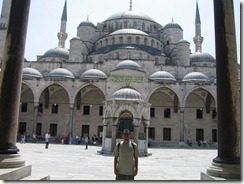
Istanbul, Turquia - Ines em frente a Mesquita Azul (de 1616), no Sultanahmet, o centro histórico com as mesquitas e palácios mais importantes.  Apesar do nome, ela não é azul por fora, mas por dentro.  É a mesquita com mais minaretes (as torres pontudas), e por isso é facilmente reconhecida mesmo de longe. Para a letra da música: Istanbul (Not Constantinople)

Eu e a Ines fomos passar ~1 semana de férias na Turquia neste verão.  Nós passamos 5 dias em Istanbul, a maior cidade do país, e 3 dias na costa sul do país, na região de Fethiye.  Para o relato da segunda parte da viagem, veja o post seguinte, Patara, Kas e Saklikent.

A atração principal de Istanbul são as mesquitas antigas, que enfeitam a cidade toda.  As principais eram a Mesquita Azul e a Aya Sofya, que visitamos logo no primeiro dia.  A Mesquita Azul (de 1616AD) tem um exterior muito elaborado, e domina a vista da cidade com seus seis minaretes (torres pontudas).  A Aya Sofya, de 537AD, era uma igreja que foi convertida em mesquita, e por isso tem um aspecto estranho por fora.  Mas o interior dela é enorme, e muito bonito - ela tinha o maior domo e a maior nave do mundo antes da construção da Basílica de São Pedro no Vaticano. Istanbul, Turquia - Luiz em frente a fonte no pátio da Mesquita Azul.  A maioria das mesquitas que vimos tem um pátio com arcadas e domoscom uma fonte no meio para as pessoas se purificarem (lavar pés, mãos e cara) antes de entrar na mesquita. Também visitamos o Palácio Topkapi, o palácio dos sultões durante a maioria do Império Otomano; a Cisterna da Basílica, uma câmara subterrânea enorme usada para armazenar água durante o Império Bizantino; e várias outras mesquitas.  A mais interessante foi a Yeni Camii, ou "mesquita nova" (como o guia turístico diz, só em Istanbul que uma mesquita de 400 anos de idade é apelidada de mesquita "nova").  Ela não era uma das grandes atrações, e por isso quase que não entramos nela, mas quando fomos tivemos uma surpresa: o interior é coberto com azulejos com muito detalhe, mais do que qualquer outra que vimos.  Apesar do exterior comum (para Istanbul), o interior era lindo. 

Pegamos um ferry que subia o Bósforo, o canal que corta Istanbul, e liga o Mar Negro ao Mar de Marmara (este conectado ao Mediterrâneo ao sul), e passamos o dia a passear de barco, até chegarmos a um forte com vista para o Mar Negro ao norte.  Depois fomos para a zona moderna de Istanbul, a Praça Taksim, ode onde sai uma avenida enorme cheia de lojas modernas (as mesmas que se vêem em qualquer cidade da Europa) e lotada de gente fazendo compras.  Passeamos também pelos mercados principais da cidade antiga: o Grande Bazar, que era gigantesco, e o Bazar de Especiarias, que cheirava muito bem.  No último dia fomos ao Museu Arqueológico, que tinha como atração principal uma coleção de túmulos com ~2500 anos de idades da civilização Lícia, um povo mais ou menos grego da costa sul no Mediterrâneo (a área que fomos visitar depois).

Em Istanbul ficamos em dois hotéis: o Antique Hostel, que foi ótimo (apesar de simples) e eu recomendo, e o Anzac Wooden House, que foi péssimo.  Ficamos impressionados com o fato que os preços em Istanbul eram exatamente os mesmos que aqui em Portugal, desde a acomodação até as refeições.  E ficamos um pouco decepcionados com a comida, e a maioria das refeições ficou deixando a desejar - geralmente um prato era bom e o outro ruim.  Na minha opinião, as melhores refeições eram nas casas de Kebap (carne de vaca e cabra grelhada), especialmente os que vendiam Kebaps na rua.  Por exemplo, um dos meus preferidos foi o "Ortaklar Iskender Kebap", em uma rua escondida perto de Cemberlitas.  Nós entramos nele por acaso, porque quando passamos em frente o cheiro estava muito bom e haviam muitos turcos sentados na frente; parecia um restaurante para os turcos, e não para os turistas.  Outro preferido foi pela localização, não pela comida: um jantar romântico no Doy-Doy, em um terraço com vista para a Mesquita Azul.  Mas a melhor comida de todas foi na pensão Akay em Patara (na região de Fethyie) - aí sim comemos bem!

Como podem ter visto pela descrição, Istanbul, e a Turquia ao todo, é um lugar com muita de história, com uma sucessão de Impérios e nações (Lícios, Gregos, Romanos, Bizantinos, Otomanos, e Turcos).  Istanbul é também uma cidade que liga a Europa a Ásia, e está dividida pelo canal do Bósforo, com uma margem em cada continente.  Ela é uma mistura de culturas, e para exemplificar isso nós vemos mulheres vestidas dos pés as cabeças de preto e só com os olhos de fora; mulheres vestidas com pouca roupa, como qualquer brasileira ou portuguesa com este calor; e mulheres vestidas em roupas em um espectro contínuo de um a outro.  Para me situar melhor no país e na história, peguei um romance histórico que se passa na Turquia, recomendado pelo guia turístico.  O livro era Birds without Wings, de Louis de Bernières, e se passa da virada do século até a guerra da independência da Turquia.  O livro é muito bom, e ensina um bocado sobre a história e cultura do país.  Do provérbio fictício: "Man is a bird without wings, and birds are men without sorrows" (="homem é um pássaro sem asas, e pássaros são homens sem mágoas").  Por coincidência, a história se passa na região de Fethyie, para onde fomos depois de Istanbul, e portanto estava doido para ir e ver as coisas descritas no livro.   O relato do resto da viagem está no posto seguinte, Patara, Kas e Saklikent.

Para verem as fotos da viagem, clique nas fotos acima ou nos links abaixo:

Álbum grande (105 fotos)

Álbum pequeno (37 fotos)

Sunday, May 23, 2010

São Tiago do Campo de Estrelas

20100523_Santiago_de_Compostela_048 No fim-de-semana passado, eu fui com a Ines a Santiago de Compostela, na Espanha, onde ela foi dar um seminário.  Santiago fica na Galícia, que não apenas é logo ao norte de Portugal, mas também é muito próxima culturalmente – lá eles falam galego, que parece mais com português do que com castelhano. 

O centro histórico de Santiago é lindíssimo, com prédios de granito e paredes brancas.  As ruas são estreitas, com muitas arcadas e varandas, e o chão é coberto de blocos de granito também.

Santiago é supostamente a terceira cidade mais santa do mundo para a igreja católica, depois de Jerusalém e Roma.  Ela é o destino final dos Caminhos de Santiago, rotas para peregrinos religiosos desde a Idade Média.  A cidade ainda hoje está cheia de peregrinos e turistas

Nós demos sorte na nossa visita porque 2010 é um ano de Jubileu, o que acontece sempre que o dia de São Tiago cai num domingo.  Nestes anos, quem entra pela porta recebe uma Indulgência Plenária, o que significa que o castigo que a pessoa iria pagar no purgatório antes de ir pro céu é cancelado.

O Dezaseis, um restaurante ótimo recomendado pelo Jose, o nosso anfitrião na universidade, era muito bonito.  Lá comemos um polvo grelhado, típico da região, que foi a melhor que tivemos em Santiago.  Ah, e também foi a minha primeira vez na Espanha!  Quero ver se finalmente começo a viajar pela Europa.

Para ver fotos da viagem, clique aqui ou na foto acima.